
Filtration & Laboratory Filters
Filtration & Laboratory Filters covers classic sample filtration in the laboratory. LT Laborhandel stocks folded filters, round filters and glass fibre filters from Macherey-Nagel in numerous pore sizes and diameters, as well as CHROMAFIL syringe filters for sample preparation. Our service team will be happy to help you choose the right filter.
 Promo
Promo
Laboratory filters by Macherey‑Nagel
Folded, round and glass fibre filters from Ø 25 to 600 mm plus CHROMAFIL syringe filters, all below the RRP.
Compared with the Macherey-Nagel RRP.
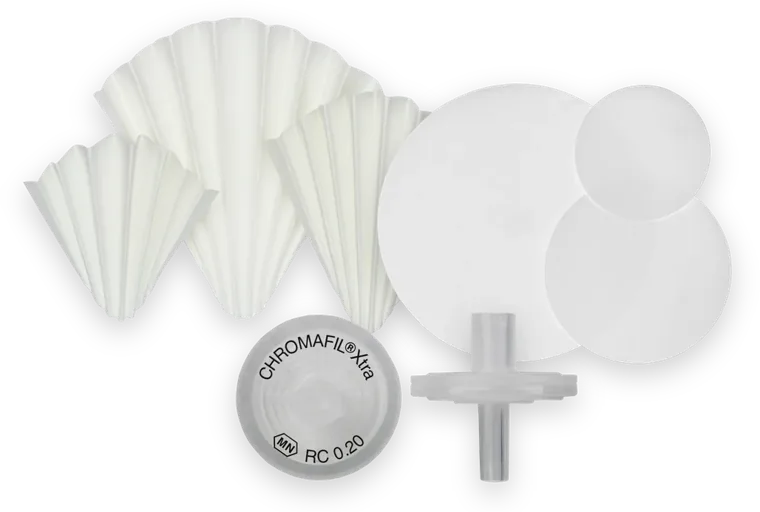
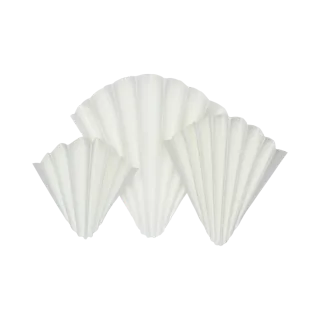
Folded filters
MN 615, 616 md, 617 and 619 for qualitative filtration, from fast to slow.

Round filters
Qualitative from MN 615 to 619, quantitative and ashless as MN 640 w, m and d.
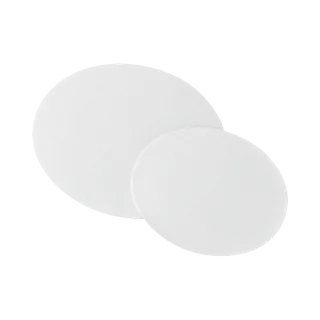
Glass fibre filters
MN 85/70, MN 85/90, GF-1 and GF-3, with or without binder.
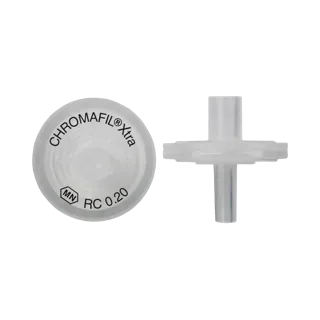
Syringe filters
CHROMAFIL Xtra RC with 0.2 µm for sample preparation.

Macherey-Nagel pleated filter MN 616 md, high-quality, 4–7 µm (Ø 55–500 mm)
For finer particulate matter: Macherey-Nagel MN 616 md pleated filter Macherey-Nagel MN 616 md pleated filters are the right choice when standard filters (such as the MN 615) reach their limits. In this quality grade, the abbreviation ‘md’ stands for a slightly higher density and improved retention capacity. These are high-quality filter papers that are machine-pleated (1/4-fold) so that they can be inserted into the funnel straight away. The difference: medium-speed to slow In everyday laboratory work, it often happens that fine-grained precipitates pass through a standard filter (leaving the filtrate cloudy). This is where the MN 616 md comes into its own: Filtration rate: At approximately 55 seconds (in accordance with DIN 53137), this paper filters about half as fast as the standard MN 615 type. This reduced flow rate is necessary to reliably retain finer particles. Retention capacity: The pore size range is 4 to 7 µm. This ensures that fine precipitates such as barium sulphate (cold-precipitated), tin oxide or sugar solutions are reliably clarified. Surface: The filters are smooth, which enables good recovery of the precipitate. Advantages of pleated filters Despite the finer pore structure, you benefit from the pleated geometry. The large surface area prevents the filter from becoming clogged quickly, which is often a problem with flat circular filters of the same density. You obtain a clear filtrate within a reasonable time. Quality and purity The MN 616 md grade is made from high-quality cellulose with a very high proportion of alpha-cellulose. The ash content is < 0.1 per cent, which makes the paper virtually chemically inert. It is perfectly suited to qualitative analyses in chemistry, biology and food monitoring. Available sizes We offer this speciality paper in a comprehensive range, from small 55 mm filters for micro-funnel applications right up to the 500 mm large format for technical applications. Areas of application Analytical: Filtration of fine precipitates (e.g. calcium oxalate, magnesium ammonium phosphate). Beverage industry: Clarification of wine, beer or juices in cases of fine turbidity. Electroplating: Bath maintenance for fine suspended solids. Environment: Soil analysis and water treatment. Technical data Type: MN 616 md (pleated filter) Type: High-quality filter paper Filtration rate: Medium-fast to slow (approx. 55 s) Surface: Smooth Basis weight: 85 g/m² Thickness: 0.17 mm Retention range: 4–7 µm (fine particles) Ash content: approx. 0.1 % Material: Cellulose Format: folded into quarters Packaging unit: 100 pieces per pack Contents 1 x pack of 100 Macherey-Nagel pleated filters (type MN 616 md) (The diameter corresponds to the variant you selected above.) Custom requirements & accessories When should you choose MN 616 md instead of MN 615? Opt for MN 616 md if your filtrate is still cloudy when using MN 615. Switch back to MN 615 if filtration with MN 616 md takes too long and the filtrate is already clear enough. Do you need funnels, stand fittings or beakers to collect the filtrate? We can fully equip your workstation. Please contact our procurement service.

Macherey-Nagel pleated filter MN 615, high quality, medium-speed (Ø 70–500 mm)
Efficiency in the laboratory: Macherey-Nagel MN 615 pleated filters Macherey-Nagel MN 615 pleated filters are the time-saving solution for daily laboratory routines. Unlike simple round filters, which have to be laboriously folded by hand (quarter-fold) before being placed in the funnel, these filters are already machine-folded (1/4-fold). This not only saves valuable working time but also offers a decisive technical advantage: the pleated structure significantly increases the effective filter surface area. The result is a faster flow rate and a reduced tendency to clog, as the precipitate is distributed more evenly. The all-rounder for qualitative analyses The MN 615 grade is the globally proven standard paper for qualitative analyses (ash content approx. 0.1 per cent), which primarily involve the clarification of solutions or the recovery of filtrates. Medium-speed filtration: With a filtration time of approx. 22 seconds (according to DIN 53137), this paper offers the ideal balance between speed and retention. Smooth surface: The fibres are processed to form a homogeneous structure that reliably retains particles. Retention range: Particles ranging from 4 to 12 µm (e.g. lead sulphide, calcium oxalate) are reliably filtered. Wide range of sizes We offer the MN 615 pleated filters in a wide range of diameters – from 70 mm for small analytical funnels up to 500 mm for large-scale production batches. Please note that the diameter specified always refers to the diameter of the unfolded paper disc. Areas of application General chemistry: Clarification of salt solutions and buffers. Food analysis: Filtration of macerates, juices or extracts. Schools & Education: Time-saving preparation of school experiments. Environmental analysis: Pre-filtration of water samples. Technical data Type: MN 615 (folded filter) Type: Qualitative filter paper Filtration rate: Medium-fast (approx. 22 s) Surface: Smooth Basis weight: 70 g/m² Thickness: 0.16 mm Retention range: 4 – 12 µm Ash content: approx. 0.1% Material: Cellulose (approx. 95% alpha-cellulose) Format: folded into quarters (ready for the funnel) Packaging unit: 100 pieces per pack Contents 1 x pack of 100 Macherey-Nagel pleated filters (type MN 615) (The diameter corresponds to the variant you selected above.) Custom requirements & accessories Do you have the right funnel for your pleated filters? Rule of thumb: The top edge of the pleated filter should end approx. 1–2 cm below the rim of the funnel. A filter that is too large will protrude (risk of evaporation, tendency to creep), whilst one that is too small will not make full use of the funnel’s volume. Alternatives: If you need to filter very fine precipitates (e.g. barium sulphate), we recommend the denser type MN 619. For very coarse, bulky precipitates, opt for type MN 617. Do you require large quantities for industrial use or special sizes? Please contact our procurement service.

Macherey-Nagel pleated filter, type MN 617, high quality, fast-filtering (Ø 55 mm – 500 mm)
Macherey-Nagel MN 617 pleated filters represent a system solution optimised in terms of materials science and highly efficient in terms of geometry, designed for rapid clarification, coarse particle separation and general sample preparation in day-to-day laboratory work. Available in an extremely wide range of diameters, from 55 mm for small-scale analytical batches up to large-area 500 mm filters for high-volume separation processes, this filter series caters for every scale of modern laboratory processes. For routine filtration in food analysis, environmental chemistry or industrial quality control, the structural purity and fibre stability of the filter paper are the primary criteria for clarifying media in a way that is gentle on the material, contamination-free and process-reliable. Maximum filtration rate thanks to pre-pleated geometry The design and fluid-mechanical foundation of this series lies in its ready-to-use pleated structure. Unlike traditional round filters, which must first be laboriously folded twice before being inserted into the funnel, the pre-formed pleat pattern multiplies the effective filtration surface area. This leads to a drastic reduction in filtration times during daily high-throughput operation. With a standardised filtration rate of approx. 9 seconds according to the manufacturer’s specification, the MN 617 grade enables an extremely rapid liquid throughput. Flow resistance is minimised, thereby gently reducing unwanted blocking effects in viscous or particle-rich sample flows. High wet tear strength and the purest raw material base From a materials science perspective, the MN 617 grade is based on refined pulp and high-quality linters, which are processed entirely free from chemical binders or additives. The smooth surface structure ensures a homogeneous non-woven fabric that exhibits excellent inherent mechanical stability. Thanks to optimised fibre entanglement, the filters possess remarkable wet tear strength. They withstand the fluid-mechanical pressure during funnel filtration without damage and do not tend to release fibres into the filtrate. With a typical ash content of approximately 0.1 per cent, the paper is perfectly suited to qualitative analytical procedures where ash-free incineration is not strictly required. Cost-effective routine use and full GLP compliance The infrastructural validity of the MN 617 pleated filters is demonstrated by their reliability in recurring routine tasks. As the filters are supplied pre-pleated and ready for use, laboratory staff save valuable working time whilst simultaneously minimising the risk of contamination from manual folding. For laboratory managers and quality management officers in regulated B2B environments, Macherey-Nagel’s range provides a reliable basis for documentation and validation, enabling recurring test processes and certifications to be carried out reliably in accordance with GLP guidelines. Technical details Material Science & Filter Structure Filter type: High-quality filter paper / pleated filter (pre-configured and ready for use) Grade / Quality level: MN 617 Material basis: Refined alpha-cellulose and the purest linters Binder status: 100 per cent binder-free (free from chemical additives) Surface structure: Smooth Filtration properties: Fast filtration (open-pored structure for coarse precipitates) Filtration rate: approx. 9 seconds (standardised according to manufacturer’s specifications) Ash content: approx. 0.1 per cent (qualitative classification) Physical properties & dimensions Basis weight: approx. 85 grams per square metre (85 g/m²) Filter thickness: approx. 0.22 mm (millimetres) Available diameter range: 55 mm to 500 mm Diameter variants in the range: 55, 70, 90, 110, 125, 150, 185, 240, 270, 320, 385, 400, 450, 500 mm Resistance & Compliance Chemical resistance: Inert to mild acids, alkalis and a wide range of organic solvents Wet tear strength: High (structurally stable under liquid load) Quality management: Supports standardised, reproducible routine filtration processes in accordance with GLP Contents 1 x pack of Macherey-Nagel pleated filters, grade MN 617, high-quality and fast-acting (standard contents: 100 pieces per box) in the diameter selected by the customer (55 mm to 500 mm). Individual requirements & accessories To ensure the optimal integration of Macherey-Nagel pleated filters into your daily laboratory routine, we offer a comprehensive range of complementary accessories. For traditional gravity filtration, we stock chemically highly resistant glass funnels (60-degree angle) made from borosilicate glass, as well as matching Erlenmeyer flasks and laboratory beakers for collecting the filtrate. For contamination-free and precise handling of the sensitive filter elements, we recommend flat-tipped filter tweezers made from high-alloy stainless steel. For structured filtration series, we also offer robust funnel stands and sleeves. Please make use of our technical procurement service to design your analytical infrastructure to suit your specific needs.

Macherey-Nagel MN 85/90 BF round glass fibre filter, binder-free, 0.5 µm (Ø 5 mm – 270 mm)
Macherey-Nagel MN 85/90 BF glass fibre round filters represent a high-purity, matrix-stable system solution for demanding filtration processes, gravimetric analyses and the highly efficient separation of ultrafine particles in laboratories, environmental analysis and industrial quality control. Manufactured from 100% pure borosilicate glass fibres without any organic or inorganic binders (BF=binder-free), these depth filters guarantee absolute chemical inertness and contamination-free analytical results. The wide range of available diameters, from a delicate 5 mm up to a large-area 270 mm, enables perfect scalability for all standard Nutsch, extraction and micro-weighing equipment. Material-science purity and binder-free structure The process-engineering heart of the MN 85/90 BF filters is their binder-free fibre architecture. As no chemical additives or acrylic resins are used at all during manufacture, the filter matrix remains absolutely stable even when filtering highly aggressive organic solvents, strong acids or alkaline media. Any leaching of foreign substances from the material into the filtrate – which could interfere with sensitive downstream detection methods (such as HPLC, GC or ion chromatography) – is reliably prevented in a manner that is gentle on the material and ensures process reliability. Furthermore, the high purity of the borosilicate fibres ensures complete biological inertness, which makes them ideal for use in microbiology and cell culture filtration. Excellent retention capacity and outstanding fluid dynamics With a nominal retention capacity of 0.5 µm in liquid media, these glass fibre filters are ideally suited for the separation of the finest precipitates, colloidal suspensions and proteins. The three-dimensional depth filter structure not only traps particles on the surface but also traps them within the fibre mesh. This results in an exceptionally high dirt-holding capacity and prevents premature clogging of the filter, even with samples containing high levels of matrix material such as wastewater, slurries or extracts. At the same time, excellent flow rates are achieved, which significantly reduces filtration times in multi-user operation. Extreme thermal resilience and versatile environmental analysis From a thermodynamic perspective, the MN 85/90 BF round filters are characterised by outstanding temperature resistance of up to 500 degrees Celsius. This thermal stability makes them ideal for standard gravimetric methods, such as the determination of filterable substances (dry residue) and loss on ignition in accordance with national and international environmental standards. The filters can be dried in a drying oven or ashed in a muffle furnace without any risk of the fibre structure collapsing. Typical areas of application include not only wastewater and drinking water monitoring but also air pollution control, the protection of membrane filters against clogging (pre-filtration) and the clarification of viscous phases. Technical details Metrology & Filter Specifications Filter type: Glass fibre round filter / depth filter Quality / Grade: MN 85/90 BF Binder: 100% binder-free (BF) Nominal retention capacity (liquid): 0.5 µm Retention capacity (air/gas): Higher (due to diffusion and interception mechanisms) Filtration characteristics: Very high flow rate with maximum particle retention Material properties & resilience Base material: High-purity borosilicate glass fibre mesh Chemical resistance: Universally resistant to organic solvents, acids and mild alkalis Thermal stability: Up to 500 degrees Celsius (completely incinerable/refractory) Biological reactivity: Inert (no breeding ground for microorganisms) Dimensions & Range of Variants Available diameters: 5 mm to 270 mm (selectable according to application) Filter shape: Round filters (pre-cut, flat) Packaging: Usually supplied in a handy cardboard box (quantity varies depending on diameter, usually 100 pieces) Contents 1 x pack of Macherey-Nagel MN 85/90 BF round glass fibre filters in the selected diameter variant 1 x batch-specific quality certificate from the manufacturer Important note: Vacuum filtration units, Büchner funnels, suction flasks and suitable rubber sleeves (Guko) are not included in the scope of delivery and must be selected separately to suit the specific workstation. Individual requirements & accessories To realise the full potential of the Macherey-Nagel MN 85/90 BF filters, their use in professional vacuum filtration set-ups is recommended. Our laboratory range includes suitable porcelain and stainless steel Büchner funnels, as well as glass filtration apparatus with frit supports. For the precise handling of damp round filters without damaging the fibre structure, we recommend the use of rounded stainless steel laboratory tweezers. Should you require filters with a different retention capacity or integrated organic binders for your analytical work, we also offer the complete Macherey-Nagel filter range (e.g. MN 85/70 or membrane filters). Please make use of our technical procurement service to design your filtration workstations to suit your specific requirements.

Macherey-Nagel MN 615 circular filter, high quality, medium-speed (Ø 25 – 500 mm)
The all-rounder for the laboratory: Macherey-Nagel MN 615 round filters Macherey-Nagel MN 615 round filters are an indispensable part of the basic equipment for chemical analysis and industrial quality assurance. These are high-quality filter papers designed for general separation tasks where the filter residue does not need to be determined gravimetrically (no ash-free ignition required). This product range is characterised by its versatility: it is available in numerous diameters ranging from 25 mm to 500 mm, thus covering every funnel size – from the smallest micro-funnel right through to large industrial filtration units. Features: The happy medium The MN 615 grade is the standard for routine filtration. It offers the ideal balance between time savings and particle retention: Filtration speed: Classified as medium-speed filtration (approx. 22 seconds according to DIN 53137), the paper enables rapid processing without clogging. Surface: The filters are smooth. This makes it considerably easier to scrape off or recover precipitates from the filter cake. Retention capacity: With a pore size range of approx. 4 to 12 µm, medium-fine to coarse precipitates (such as sulphides, bichromate or calcium oxalate) are reliably retained. Quality and purity Macherey-Nagel uses high-quality raw materials for these filters. They consist of approximately 95 per cent alpha-cellulose, which ensures high chemical stability. The ash content is extremely low at approximately 0.1 per cent. This means the filters are chemically almost inert and do not contaminate your filtrates. Areas of application Routine laboratory work: clarification of buffer solutions and reagents. Education: Standard filters for schools and universities (qualitative analysis). Food industry: Filtration of extracts and juices. Electroplating & metalworking: Bath maintenance and analysis. Select the correct diameter Simply select the diameter that fits your funnel from the menu above. As a rule of thumb: when inserted, the filter should not protrude beyond the rim of the funnel, but should end approximately 1–2 cm below the rim. Technical data Type: MN 615 Type: High-quality filter paper, round filter Filtration speed: Medium-fast (approx. 22 s) Surface: Smooth Basis weight: 70 g/m² Thickness: 0.16 mm Retention range: 4 – 12 µm Ash content: approx. 0.1% Material: Cellulose Packaging unit: 100 pieces per pack Contents 1 x pack of 100 Macherey-Nagel round filters (type MN 615) (The diameter corresponds to the variant you selected above.) Individual requirements & accessories Filter paper is only as good as the accessories used with it. To ensure your filtration process runs smoothly, you’ll need the right funnel. Suitable funnels: Whether made of glass or robust plastic (PP/TPX) – ensure that the filter diameter you have chosen matches the funnel size (the filter should end approx. 1–2 cm below the rim). Other pleat configurations: Do you require faster filtration whilst maintaining the same pore size? We also stock this type as a pleated filter (increased surface area). Quantitative analyses: If you need to ash the residue (gravimetry), you will require ash-free filters (e.g. MN 640). Can’t find the right size, or do you need large quantities for industrial applications? We can source any speciality filter for you. Please contact our procurement service.

Macherey-Nagel MN 85/90 round glass fibre filter with binder, 0.5 µm (Ø 25 mm – 320 mm)
Macherey-Nagel MN 85/90 round glass fibre filters, renowned for their premium quality, represent a system solution optimised in terms of materials science and offering high mechatronic stability for demanding clarification, particle separation and sample preparation in modern day-to-day laboratory work. Available in a wide, application-specific range of diameters – from 25 mm for compact in-line filtration systems up to large-area 320 mm for high-volume funnel and Nutsch set-ups – this series caters for all scales of analytical and process engineering applications. As the most widely used glass fibre filter for general laboratory applications, this filter media is employed wherever excellent flow rates must be combined with outstanding mechanical strength in order to separate particle-rich media in a way that is gentle on the material and ensures process reliability. Outstanding mechanical stability thanks to organic binders The unique technological feature of the MN 85/90 grade is based on the targeted combination of high-purity borosilicate glass microfibres with a specialised organic binder. Whilst binder-free glass fibre filters may be prone to fibre shedding under intense fluid-mechanical stress or strong mechanical shearing, the binder matrix permanently stabilises the fibre structure. This gives the smooth round filter remarkable tear resistance and inherent stability when wet. With a filter thickness of 0.6 mm and a defined basis weight of 90 grams per square metre (90 g/m²), the filter’s three-dimensional depth structure remains completely dimensionally stable even under high filtration pressure, which reliably prevents transient filter breakthrough. Highly efficient separation and rapid filtration kinetics From a metrological perspective, the MN 85/90 filter offers an extremely fine nominal retention capacity of 0.5 micrometres with a separation efficiency of at least 99.99 per cent. This fine pore structure makes the filter medium ideal for the reliable separation of the finest precipitates, microparticles and macromolecular aggregates. Despite this high retention capacity, the high porosity of the glass fibre fleece guarantees a remarkable hydrodynamic flow rate: with a standardised filtration time of 15 seconds, flow resistance is minimised, thereby significantly speeding up time-critical routine analyses and high-throughput filtration. Undesirable clogging effects (blocking) in heavily particle-laden sample flows, such as wastewater or sludge samples, are reduced in a way that is gentle on the material. Thermal resistance and comprehensive quality management The thermodynamic limit of the MN 85/90 filter is set at a maximum temperature of 200 degrees Celsius due to the organic binder component. Up to this threshold, the material remains absolutely structurally stable, chemically inert and colourfast (pure white). The filter’s smooth surface prevents irreversible adsorption of sample components and allows for residue-free handling. For laboratory managers and quality management officers in regulated environments, Macherey-Nagel’s range provides a reliable and audit-compliant validation basis for carrying out recurring test processes and certifications in accordance with GLP and GMP guidelines in a process-reliable manner. Technical details Material Science & Filter Structure Filter type: Glass fibre depth filter / round filter Grade / Quality level: MN 85/90 Material basis: High-purity borosilicate glass microfibres Binder status: With organic binder (for maximum mechanical strength) Surface finish: Smooth, uniformly structured Colour: White Nominal retention capacity: 0.5 micrometres Separation efficiency: greater than or equal to 99.99 per cent Physical & kinetic properties Basis weight: approx. 90 grams per square metre (90 g/m²) Filter thickness: approx. 0.6 mm (millimetres) Filtration rate: 15 seconds (standardised according to the manufacturer’s specifications) Air filtration rate: 15 seconds Thermal stability: Remains stable up to a maximum of 200 degrees Celsius (392 degrees Fahrenheit) Dimensions, Logistics & Compliance Available diameter range: 25 mm to 320 mm Common diameter variants: 25, 37, 45, 55, 70, 90, 110, 125, 150, 185, 240, 270, 320 mm Hazard classification according to GHS: Not classified as a hazardous substance; completely safe to handle Quality management: Supports standardised, reproducible routine filtration procedures in accordance with GLP Contents of delivery 1 x pack of Macherey-Nagel glass fibre round filters, grade MN 85/90, with binder (standard contents: 100 pieces per box) in the diameter selected by the customer (25 mm to 320 mm). Customised requirements & accessories To ensure the optimal integration of Macherey-Nagel glass fibre filters into your daily laboratory routine, we offer a comprehensive range of complementary peripherals. For classic vacuum or Büchner filtration, our portfolio includes robust porcelain Büchner funnels, suitable suction flasks made from thick-walled borosilicate glass, and complete multi-stage filtration units made from stainless steel. For contamination-free and gentle handling of the sensitive filter discs, we recommend the use of flat-tipped filter tweezers made from high-alloy, corrosion-resistant stainless steel. For subsequent drying processes until a constant weight is achieved at temperatures of up to 200 degrees Celsius, we also offer chemically inert Petri dishes and desiccators. Please make use of our technical procurement service to design your filtration workstations to suit your specific requirements.

Macherey-Nagel MN 619 round filter: high quality, slow-filtering, smooth (Ø 55 mm – 500 mm)
The Macherey-Nagel MN 619 round filters represent a structurally optimised and process-proven system solution for high-quality filtration in everyday laboratory work. Available in a wide range of diameters, from 55 mm for compact standard funnels up to 500 mm for high-volume separation processes, this filter series caters for every scale in chemistry, pharmaceuticals, environmental analysis and industrial quality control. Wherever fine-particle suspensions need to be clarified or demanding samples pre-isolated, this slow-filtration quality guarantees gentle handling of materials, particle-free results and reliable process performance. Maximum particle retention thanks to a dense fibre structure The technological foundation of the MN 619 round filters is based on refined cellulose and linter fibres, which are processed into a homogeneous, close-meshed structure. The slow filtration rate of around 100 seconds (according to the manufacturer’s specifications), from which the filter takes its name, results from the high density of the pore structure. This geometric structure ensures that even fine crystalline precipitates and microparticles are reliably retained on the filter surface. The risk of a transient particle flow through the filter medium is thus effectively minimised, which reliably safeguards the validity of subsequent qualitative analyses. Smooth surface geometry for residue-free separation From a materials science perspective, the completely smooth surface of the round filter offers significant functional advantages in sample preparation. Unlike creped variants, fine precipitates on the smooth structure do not tend to become lodged in fibre recesses. This noticeably facilitates the subsequent mechanical removal or washing out of the filter cake. Furthermore, the material is characterised by high purity and a low ash content typical of high-quality filter papers, thereby gently preventing unwanted chemical interactions with the sample medium or solvent extractions. High wet strength for reproducible laboratory processes Despite being based on pure cellulose without synthetic stabilisers, the MN 619 round filters exhibit remarkable inherent mechanical stability when wet. The three-dimensional depth structure remains completely dimensionally stable even under the hydrostatic pressure of a fully filled funnel. For laboratory managers and quality management personnel in regulated environments, Macherey-Nagel offers, with this standardised fibre grade, a reliable and audit-compliant documentation basis for carrying out recurring routine filtrations in accordance with GLP guidelines in an error-free and reproducible manner. Technical details Material Science & Filter Structure Filter type: Qualitative round filter / paper filter Grade / Quality level: MN 619 Material composition: High-purity cellulose and refined linter fibres Surface texture: Smooth, uniformly structured Colour: White Filtration rate: Slow (approx. 100 seconds according to the manufacturer’s specifications) Intended use: Separation of fine-crystalline and very fine precipitates Physical properties Weight per unit area: approx. 85 grams per square metre (85 g/m²) Filter thickness: approx. 0.17 mm (millimetres) Fibre shedding: Extremely low due to dense fibre bonding Chemical resistance: Inert to mild acids, alkalis and common organic solvents Dimensions & range of variants Available diameter range: 55 mm to 500 mm Common diameters: 55, 70, 90, 110, 125, 150, 185, 240, 320, 400, 500 mm Cut: Geometrically precise, fibre-free circular cut Hazard classification: Not classified as a hazardous substance under GHS guidelines; safe to handle Contents 1 x pack of Macherey-Nagel glass fibre round filters, quality MN 619, smooth (standard contents: 100 pieces per box) in the diameter selected by the customer (55 mm to 500 mm). Customised requirements & accessories To ensure the optimal integration of Macherey-Nagel round filters into your daily laboratory routine, we offer a comprehensive range of complementary accessories. For standard filtration, our portfolio includes robust glass funnels, polypropylene funnels, as well as suitable laboratory stands and funnel holders. For contamination-free and gentle handling of the wet circular filter discs, we recommend the use of flat-tipped filter tweezers made from high-alloy, corrosion-resistant stainless steel. For subsequent drying or storage processes, we also offer chemically inert Petri dishes, watch glasses and desiccators. Please make use of our technical procurement service to design your filtration workstations to suit your specific requirements.

Macherey-Nagel MN 85/70 round glass fibre filter, with binder, 0.6 µm (Ø 25–320 mm)
Reliable filtration with high stability: MN 85/70 glass fibre round filters MACHEREY-NAGEL’s MN 85/70 glass fibre round filters are the tried-and-tested standard for routine laboratory filtration where a fast flow rate and good mechanical strength are essential. Unlike pure (binder-free) glass fibre filters, the MN 85/70 type contains an organic binder. This binder gives the filter significantly greater mechanical stability, making it more resistant to tearing even when wet. It is slightly thinner and lighter than the MN 85/90 grade, yet still delivers excellent retention capacity. Features and benefits High mechanical strength: Thanks to the organic binder, the filter is easier to handle without tearing immediately when wet. Fine retention capacity: With a separation efficiency of 0.6 µm, the filter is ideally suited for the separation of finely dispersed turbidity and particles. Temperature-resistant: The filter withstands temperatures of up to 200 °C without any problems. (Note: For higher temperatures up to 500 °C, please select the binder-free variant MN 85/70 BF). High filtration rate: With a filtration time of approx. 15 seconds, the filter enables rapid workflows when handling large volumes of samples. Areas of application General clarification of aqueous solutions in routine laboratory work. Water analysis and environmental monitoring (provided the organic binder does not interfere with the analytes). Pre-filtration of heavily contaminated media to protect downstream membranes. Suitable for medium- to fine-particle turbidity. Technical data Manufacturer: MACHEREY-NAGEL Type: MN 85/70 Type: Round filter Retention capacity: 0.6 µm Binder: Yes (organic binder) Basis weight: 73 g/m² Thickness: 0.42 mm Filtration rate: approx. 15 s Max. temperature resistance: 200 °C Surface: Smooth Colour: White Contents 100 x MACHEREY-NAGEL MN 85/70 round glass fibre filters (diameter as selected) Custom requirements & accessories Do you need the right porcelain Nutsch funnel, a suction flask or a vacuum pump for your filtration? Or are you looking for the binder-free alternative (MN 85/70 BF) for gravimetric analyses up to 500 °C? Please contact our procurement service.

Macherey-Nagel MN GF-1 round glass fibre filter, binder-free, 0.7 µm (Ø 25–270 mm)
Fluid mechanics and submicron depth filtration In instrumental analysis and gravimetry, the separation kinetics of glass fibre filters differ fundamentally from those of conventional cellulose-based surface filters (sieve effect). The Macherey-Nagel MN GF-1 operates according to the process principle of depth filtration. The matrix consists of a complex, three-dimensional lattice of ultra-fine borosilicate glass microfibres. When a differential pressure is applied (vacuum filtration), particulate contaminants penetrate deep into the filter’s internal hollow structure, where they are retained by macromolecular adhesion and mechanical interception. This three-dimensional contaminant retention architecture generates a massive contaminant holding capacity and prevents premature hydrodynamic clogging of the filter. With a high-precision nominal retention capacity of 0.7 µm, the MN GF-1 guarantees the quantitative retention of the finest precipitates, bacteria or suspended solids whilst maintaining an excellent volumetric flow rate. Thermodynamic stability and chemical inertness The gravimetric determination of organic or inorganic fractions (such as suspended solids in accordance with EN 872) often requires extensive thermodynamic drying processes. The key metrological advantage of the MN GF-1 is that it is completely free of binders (binder-free). Whilst conventional filters are structurally bonded using organic adhesives, the integrity of this filter is based purely on the mechanical interlacing of the glass fibres. This purity in terms of materials science allows the filter to be exposed to extreme temperatures of up to 500 °C without the matrix suffering thermal degradation or organic binders outgassing, which would distort the mass spectrometric or gravimetric blank value. The borosilicate glass is also completely inert to almost all aggressive solvents, strong acids and bases (with the notable exception of hydrofluoric acid and highly concentrated hot alkalis). Metrological integrity and capillary retention The combination of chemical inertness, high permeability and submicron retention makes the GF-1 the process standard in water and wastewater analysis, protein precipitation and cell harvesting. The extremely high specific surface area of the borosilicate fibres also enables efficient capillary absorption of liquid media. By eliminating cellulose-based matrices, any microbial growth on the filter surface is physically prevented, thereby ensuring the complete integrity of the retained biological or chemical fractions right through to the final spectroscopic or gravimetric analysis. Technical details Materials Science & Thermodynamics Filter matrix: 100% pure borosilicate glass (microfibres) Binder: Completely binder-free Thermodynamic stability (temperature resistance): Up to approx. 500 °C Chemical inertness: Highly resistant to solvents, acids and bases (except hydrofluoric acid/HF) Metrology & Fluid Mechanics Filtration mechanism: Three-dimensional depth filtration Nominal retention capacity (particle size): 0.7 µm Gramme per square metre: approx. 55 g/m² Matrix thickness: approx. 0.22 mm Flow rate: Very high (in relative terms to the submicron pore size) Geometry & format Product type: Round filter (die-cut) Available diameters (variables): 25 mm, 37 mm, 45 mm, 47 mm, 55 mm, 70 mm, 90 mm, 110 mm, 125 mm, 150 mm, 185 mm, 240 mm, 270 mm Contents 1 x Macherey-Nagel glass fibre round filter MN GF-1 folding box (100 pieces; may vary for extremely large diameters) (Important note: This is a product with variations. The exact geometric dimensions must be metrologically adapted to the existing filtration equipment prior to purchase!) Custom requirements & accessories Due to the absence of binding agents, the GF-1 glass fibre round filters have lower structural flexural strength than cellulose filters and must not be creased (pleated filter construction). They are strictly intended for flat-bed filtration in process engineering. To generate the hydrodynamic differential pressure, you will require suitable vacuum filtration equipment (such as a Büchner funnel made of porcelain or glass frit), a suction flask and a chemical-resistant diaphragm vacuum pump. When selecting the size, ensure that the circular filter completely covers the perforated base of the funnel without rising up at the edges, in order to prevent a bypass flow (leakage). Please feel free to contact our procurement service at any time for assistance with configuring your vacuum setup.

Macherey-Nagel CHROMAFIL Xtra RC syringe filter, 0.2 µm, 729236
Sample preparation in chromatography requires reliable syringe-tip filters that retain particles without altering the sample. The CHROMAFIL Xtra RC syringe-tip filter from Macherey-Nagel uses regenerated cellulose as the membrane material and is therefore suitable for aqueous and organic-aqueous, polar to moderately polar sample solutions. Hydrophilic RC membrane with low protein binding The hydrophilic RC membrane has a low protein binding capacity (84 µg/25 mm) and is therefore suitable for sensitive samples. The effective filtration area is 1.9 cm² with an effective membrane diameter of 15.6 mm; the dead volume is just 30 µL. Recommended for particles < 3 µm; suitable for GC and SFC. Labelled for method validation and certification Unlike colour-coded versions, this filter is labelled – useful for documentation in validated methods and for certification purposes. The housing is made of polypropylene (PP); the inlet is a Luer-Lock connector (top) and the outlet is a Luer tip (bottom). All CHROMAFIL filters are autoclavable (121 °C, 1.1 bar, 30 min). Application Recommended sample volume 1–5 mL. Non-sterile. Store at 15–25 °C. Technical details Type Syringe-mounted filter, labelled Membrane type Regenerated cellulose (RC) Membrane properties Hydrophilic Membrane pore size 0.2 µm Filtration type 13 mm Effective filtration area 1.9 cm² Effective membrane diameter 15.6 mm Protein binding capacity Low (84 µg / 25 mm) Recommended application(s) < 3 µm, for GC and SFC, suitable for aqueous, polar, hydrophilic and moderately polar samples with low particle load Sample volume 1–5 mL Dead volume 30 µL Inlet Luer Lock (top) Outlet Luer tip (bottom) Hardware Polypropylene (PP) housing with filter membrane Housing type Wheel-shaped housing Colour code (top) Labelled Colour code (bottom) Colourless Marking type Labelled Method Filtration Sterile No Storage temperature 15–25 °C Gross weight (including packaging) 206 g Packaging dimensions 110 x 110 x 105 mm Hazardous substances No Trademark CHROMAFIL Xtra

Macherey-Nagel quantitative round filters, type MN 640 w, ash-free, fast-filtering (Ø 55 mm – 320 mm)
The Macherey-Nagel quantitative round filters of the premium MN 640 w grade represent a system solution optimised in terms of materials science and highly efficient in terms of fluid mechanics, designed for precise gravimetric analysis, the quantitative separation of solids and demanding sample preparation in day-to-day laboratory work. Available in a range of diameters from 55 mm for small-scale analytical applications up to large-area 320 mm filters for high-volume separation processes, this filter series caters for every scale of modern laboratory processes. For quantitative determinations in environmental analysis, metals and building materials chemistry, as well as in pharmaceutical purity testing, the uncompromising purity of the filter medium is the primary criterion for working in a way that is gentle on materials, contamination-free and process-reliable. Absolutely ash-free for error-free gravimetric analyses The technological foundation of the MN 640 w grade is based on ultra-pure raw materials such as refined alpha-cellulose and high-quality linters. In a specialised, materials-science-based refining process, the paper is washed with acids to achieve an extremely low ash content of less than 0.01 per cent. This absolute ash-free property ensures that, during the subsequent ashing of the filter in a muffle furnace, no transient mineral residues remain that could distort the measurement result on the analytical balance. For B2B testing laboratories, this filter medium thus provides a reliable metrological basis for reproducible and highly precise determinations of weight constancy. Optimised pore structure for fast kinetics and coarse precipitates From a fluid mechanics perspective, the smooth round filter is characterised by a deep, wide-pore structure that has been specifically optimised for maximum filtration velocity. With a standardised filtration time of approximately 9 seconds according to the manufacturer’s specification, the MN 640 w grade allows for an extremely rapid liquid throughput. The paper is therefore perfectly suited to the separation of coarse, voluminous and crystalline precipitates (such as iron hydroxide, aluminium hydroxide or coarse metal sulphates). The high porosity minimises transient flow resistance, thereby reducing undesirable blocking effects (filter clogging) in a way that is gentle on the material and ensures process reliability, even with sample flows heavily laden with particles. High wet tear strength for demanding routine processes Despite the absence of artificial binders or chemical additives, the homogeneous non-woven fabric possesses remarkable inherent mechanical stability. The optimised fibre interlacing gives the filter high wet tear strength, enabling it to withstand hydrodynamic pressure during funnel filtration or when a light vacuum is applied without any problems. For laboratory managers and quality management personnel in regulated environments, Macherey-Nagel’s MN 640 w filters provide an audit-compliant validation basis for the error-free implementation of recurring quantitative testing processes and certifications in accordance with GLP and GMP guidelines. Technical details Material Science & Filter Structure Filter type: Quantitative filter paper / Ash-free round filter Grade / Quality level: MN 640 w Material composition: 100 per cent purest alpha-cellulose and linters Finishing: Acid-washed (for maximum purity) Ash content: less than 0.01 per cent (ash-free when incinerated) Surface structure: Smooth, homogeneously woven Filtration properties: Fast filtration (for coarse and crystalline particles) Filtration rate: approx. 9 seconds (standardised according to manufacturer’s specifications) Physical properties & dimensions Basis weight: approx. 85 grams per square metre (85 g/m²) Filter thickness: approx. 0.20 mm (millimetres) Available diameter range: 55 mm to 320 mm Diameter variants in the range: 55, 70, 90, 110, 125, 150, 185, 240, 320 mm Cut: Geometrically precise, fibre-free circular cut Resilience & Compliance Chemical resistance: Universally inert to mild acids, alkalis and organic solvents Wet tear strength: High (structurally stable under fluid load) Quality management: Supports standard-compliant gravimetric analyses in accordance with GLP/GMP guidelines Contents 1 x pack of Macherey-Nagel quantitative round filters, grade MN 640 w, ash-free, fast (standard contents: 100 pieces per box) in the diameter selected by the customer (55 mm to 320 mm). Customised requirements & accessories To ensure the optimal integration of Macherey-Nagel quantitative filters into your daily analytical routine, we stock a comprehensive range of suitable laboratory peripherals. For conventional vacuum filtration, we offer chemically highly resistant porcelain Büchner funnels, matching borosilicate glass suction flasks and complete multi-filter units. For contamination-free and gentle handling of the ash-free filter discs, we recommend flat-tipped filter tweezers made from high-alloy stainless steel. For subsequent thermal treatment, our range includes high-purity porcelain crucibles, crucible tongs and desiccators for moisture-protected cooling. Please make use of our technical procurement service to tailor the design of your analytical workstations to your specific requirements.

Macherey-Nagel MN 617 round filter, high quality, fast (9 s), smooth (Ø 55–500 mm)
Rapid filtration for routine qualitative analysis In chemical, biological and industrial laboratory practice, the time-saving separation of coarse solids from liquid media is an essential process step. In contrast to quantitative analyses, where the filter paper must be ashed, qualitative filtration focuses on the rapid and efficient clarification of sample solutions. The Macherey-Nagel MN 617 round filters have been developed specifically to meet these requirements. Featuring a smooth, soft surface, these cellulose filters represent the ideal laboratory standard for the rapid routine purification of biological extracts, chemical buffers or large-volume aqueous solutions. With an extremely wide range of diameters, from 55 to 500 millimetres, the system can be integrated precisely and without the need for a bypass into absolutely any laboratory or industrial funnel. Material specifications: High-purity cellulose matrix The analytical quality of filter paper is primarily defined by its fibre structure. The MN 617 grade is manufactured from strictly selected raw materials that ensure optimum physical integrity. The paper consists of the finest cotton linters – extremely absorbent, short fibre strands from cotton seeds – combined with chemically refined pulp from coniferous and deciduous wood. This high-purity fibre blend guarantees an exceptionally high alpha-cellulose content of approximately 95 per cent. Although this is a filter paper produced purely for quality, where the ash content is usually of secondary importance in terms of the manufacturing process, this value is remarkably low at approximately 0.1 per cent. A precisely calibrated basis weight of 85 g/m² and a constant material thickness of 0.22 mm give the filter a moderate wet strength, which is entirely sufficient for all standard funnel filtration processes without the need for significant additional overpressure or a strong vacuum. Filtration kinetics: Rapid flow rate with defined particle retention The outstanding process-related property of the MN 617 is its extremely high filtration rate. In the standardised Herzberg test, the paper achieves an excellent value of just 9 seconds (the time required for 10 ml of water to pass through unimpeded). This classification as a ‘fast’ filtering paper results from a physically open, more widely spaced fibre matrix. The filter is therefore ideally suited for the rapid separation of coarse, bulky or extremely flocculent particles. The guaranteed retention capacity lies within the defined range of 7 to 12 micrometres (µm). Typical applications in routine laboratory work include the retention of coarse crystalline precipitates, the separation of insoluble impurities in preparation for sensitive optical analysis (such as photometry or spectroscopy), or the filtration of extremely viscous, gelatinous residues which would immediately render finer and more tightly meshed filter papers unusable due to clogging. Technical details Product type: High-quality filter paper for routine analysis Grade: Macherey-Nagel MN 617 Format: Round filter (pre-cut for easy folding) Available diameters: 55, 70, 90, 110, 125, 150, 185, 240, 270, 320, 385, 400, 450, 500 mm Base material: High-purity cellulose blend (cotton linter and refined pulp) Alpha-cellulose content: approx. 95% Filtration rate (classification): Fast Filtration time (Herzberg): 9 seconds Particle retention capacity: 7–12 µm Basis weight: 85 g/m² (for guaranteed structural stability) Thickness: 0.22 mm Surface texture: Smooth and soft Wet strength: Low (ideal for unpressurised gravity filtration) Ash content: approx. 0.1 % Colour: White Contents 1 x folding box containing 100 Macherey-Nagel MN 617 round filters (Please select the diameter required to fit your funnel from the drop-down menu of variants: Ø 55 – 500 mm) Individual requirements & accessories Filter paper only achieves its full hydrodynamic filtration performance when used in perfect conjunction with the correct analysis funnel. Ensure that the 60° angle of the glass funnel matches the fold of your filter paper exactly to prevent air pockets. If you need to filter extremely fine precipitates (such as barium sulphate) rather than coarse particles, we strongly advise against using this fast-flowing paper and recommend switching to the MN 619 eh (slow, 140 s) or MN 619 de (very slow, 195 s) variants. Please feel free to contact our expert procurement service at any time for professional and physically accurate system advice.

Macherey-Nagel MN 640 m, Quantitative Circular Filters, 55 mm – 320 mm
MN 640 m round filters, as ash-free, medium-speed quality filters, form the metrological backbone for gravimetric separation methods in pharmaceutical analysis and industrial quality assurance. In quantitative inorganic chemistry, the purity of the filter medium is the decisive criterion for the validity of the measurement results. From a materials science perspective, these filters consist of refined linters and cellulosic fibres with an alpha-cellulose content of over 95 per cent, which are acid-washed using a specialised process (usually with hydrochloric acid and hydrofluoric acid). This process extracts mineral impurities almost completely, leaving a residual ash content of less than 0.01 per cent. For research purchasers, the MN 640 m circular filter quantitative analysis series therefore offers a sound investment solution that enables absolutely residue-free ashing – a fundamental prerequisite for the precise determination of the mass of precipitates without systematic errors caused by filter residues. Fluid mechanics of pore dynamics and filtration kinetics The separation efficiency of the MN 640 m circular filter quantitative analysis is based on a complex three-dimensional fibre matrix, which achieves medium-speed filtration kinetics (approx. 27 s according to Herzberg). From a fluid mechanics perspective, the flow through the fibre network follows Darcy’s law, with the porosity and permeability balanced to achieve an optimal compromise between retention capacity and time savings. The smooth surface structure minimises the mechanical adhesion of fine particles to the fibres on the surface and instead promotes depth filtration within the capillary structure. This is particularly important when analysing crystalline precipitates such as barium sulphate (which has requirements similar to those of heat-sensitive substances) or calcium oxalate, as the kinetics of fluid transport promote a homogeneous distribution of the filter cake, thereby shortening the washing and drying cycles. Material purity and chemical resilience The structural integrity of the MN 640 m round filters for quantitative analysis is maintained even when exposed to aggressive chemical environments. Thanks to their chemical treatment, the fibres exhibit high resistance to strong acids and alkalis, ensuring physical stability during protracted washing processes. In materials science analysis, the consistent basis weight of 85 g/m² guarantees the reproducibility of results. The filters are designed so that they do not release any fibres into the filtrate, thereby preserving the purity of the liquid phase for subsequent spectroscopic analyses (e.g. ICP-MS or AAS). This mechanical resilience is achieved through a controlled fibre interlacing process, which guarantees high tear resistance even when wet – a critical safety feature, particularly when working with vacuum filtration systems (Nutsch filters). Process optimisation in the pharmaceutical industry, education and environmental analysis In conclusion, the MN 640 m series of round filters for quantitative analysis offers a highly efficient solution for a wide range of applications. In academic training, these filters enable the demonstration of precise gravimetric determinations during student practicals, whilst in pharmaceutical production they are used to control raw materials in accordance with the monographs of the pharmacopoeias. In environmental analysis, they are used to determine suspended solids or to separate precipitates in water samples. Their availability in diameters ranging from 55 mm to 320 mm allows for seamless integration into existing glassware and funnel geometries. By opting for this MN standard, laboratories are investing in a medium that harmonises physical precision with the highest chemical purity, thereby significantly reducing the error rate in quantitative determinations. Technical details Materials Science & Chemistry Filter type: Quantitative round filter, ash-free Base material: High-purity cellulose (linters), alpha-cellulose content > 95% Cleaning process: Acid-washed (HCl/HF treatment) Ash content: < 0.01% (physically negligible when determined gravimetrically) Colour: White Fluid mechanics & kinetics Filtration rate: approx. 27 s (medium speed, according to Herzberg) Surface texture: Smooth Basis weight: 85 g/m² (in accordance with ISO 536) Thickness: approx. 0.20 mm Air resistance: Optimised for fast flow through with high retention Mechanics & Geometry Diameter range: 55 mm to 320 mm (depending on variant) Mechanical stability: High wet strength for vacuum filtration Particle retention: Medium-fine (suitable for fine crystalline precipitates) Environmental stability Temperature resistance: Stable up to the decomposition temperatures of cellulose (ashes without residue) Chemical resistance: Resistant to most acids and organic solvents Contents 1 x pack of MN 640 m round filters (contents: usually 100 pieces per box) Important note: The filters are available in various diameters. Please ensure that the selected diameter matches the internal diameter of your funnel or Nutsch filter exactly, in order to physically prevent edge flow and bypass effects. Individual requirements & accessories For efficient quantitative filtration, the use of a suitable glass funnel (60° angle) or a porcelain Büchner funnel is essential. To increase the filtration rate for the finest precipitates, we recommend using a laboratory vacuum pump and a suitable suction flask. A porcelain crucible and a muffle furnace are required for the precise ashing of the filter after filtration. You can find suitable equipment and high-quality suction flasks via our procurement service.

Macherey-Nagel MN 619 pleated filter, high-quality, slow-flow, (Ø 55 – 500 mm)
Reliable retention of fine particles: Macherey-Nagel MN 619 pleated filters Macherey-Nagel’s MN 619 pleated filters are an indispensable consumable for high-quality analytical chemistry and routine laboratory tasks. This type is characterised by a slow filtration rate (approx. 100 seconds in accordance with DIN 53137) and a particularly high retention capacity. This makes the paper ideally suited for reliably separating very fine precipitates and turbidity from liquids. Why pleated filters rather than round filters? Standard round filters lie flat against the funnel wall, which reduces the effective filtration area. The MN 619 pleated filters are pre-folded and ready for use straight from the factory. Larger surface area: The pleated structure greatly increases the active filtration area. Faster flow rate: Although the paper’s pore structure is ‘slow’ (very dense), the pleating allows a significantly higher volume flow rate to be achieved in a shorter time, as the liquid can drain away more easily. Time savings: The laborious and error-prone manual folding of filter paper is completely eliminated. You can insert the filters directly into the glass funnel. Areas of application Qualitative analysis: Identification of substances (e.g. analytical separation procedures). Clarification: Removal of the finest particles from aqueous solutions, extracts or buffers. Chemistry & Education: Standard filter paper for the filtration of hard-to-filter, fine-grained precipitates (e.g. barium sulphate, lead sulphate). Industry: Sample preparation in quality control. Technical data Type: MN 619 Format: Pleated filter (pre-folded) Classification: Qualitative filter paper Filtration rate: Slow (approx. 100 s) Retention capacity: Fine (for fine precipitates) Material: High-purity cellulose Surface: Smooth Colour: White Contents 100 x Macherey-Nagel pleated filters MN 619 (diameter as selected) Custom requirements & accessories Are you looking for borosilicate glass funnels or sturdy plastic funnels to suit the large filter diameters (e.g. 500 mm)? Contact our procurement service for bespoke laboratory equipment.

Macherey-Nagel MN 640 d round filters, quantitative, slow (140 s), smooth, 100 pieces (Ø 55 – 320 mm)
Analytical perfection for gravimetry: the MACHEREY-NAGEL MN 640 d round filter In the strictly regulated environment of modern analytical chemistry, classical gravimetry remains one of the most precise and fundamental techniques for the quantitative determination of substances. Whether in environmental monitoring for heavy metals, quality control in the building materials industry or in complex metallurgical analyses – the absolute accuracy of the final weighing depends entirely on the purity and retention capacity of the filter paper used. With the MACHEREY-NAGEL MN 640 d round filters, you receive an ash-free, quantitative premium filter paper that has been precisely designed by engineers for these highly demanding tasks. Manufactured from the finest, high-purity cellulose, these filters represent the undisputed gold standard for the reliable retention of the finest precipitates. They offer users uncompromising mechanical precision, excellent batch-to-batch consistency and absolutely predictable filtration behaviour for all laboratory processes requiring traceability. The core technological strength: slow filtration and the finest retention capacity The process engineering superiority of the MN 640 d lies in its exceptional material density and homogeneous structure. Classified as a ‘slow’ filtering paper, it has a strictly standardised filtration rate (Herzberg) of 140 seconds. This deliberately slow flow rate is the direct physical consequence of its extremely fine-meshed and dense fibre matrix. This specific structure is absolutely essential for 100 per cent retention of very fine, almost colloidal precipitates, which would otherwise pass unhindered through medium-speed or fast filters. Classic examples of its use in everyday laboratory work include the gravimetric filtration of microfine barium sulphate (BaSO₄) in sulphate determinations or the isolation of metazincic acid. Even the tiniest particles in the microscopic range of just 2 to 4 micrometres are permanently and reliably retained on the surface of the filter. With a robust basis weight of 85 g/m² and an exceptionally uniform thickness of 0.16 mm, the filter paper effortlessly withstands the physical stress and hydrostatic pressure of standard funnel filtration without tearing, ensuring that your valuable sample always remains intact. The ash-free finishing process for guaranteed weighing accuracy The term ‘quantitative filter paper’ necessarily implies that the filter itself must not contribute any measurable weight to the isolated analytical residue, even after the ashing process. MACHEREY-NAGEL fulfils this quality promise through a highly complex, multi-stage chemical finishing process during manufacture. The pure cellulose is subjected to extremely intensive acid washing to completely dissolve and remove any trace metals, minerals or other inorganic impurities from the fibre network. The impressive result is a filter paper with a guaranteed, extremely low maximum ash content of less than 0.01%. If you transfer the MN 640 d filter, together with your washed precipitate, into a porcelain or platinum crucible and ashing it in a laboratory muffle furnace at temperatures ranging from 800 °C to 1000 °C, the paper burns almost completely, leaving no weighable residue whatsoever. This guarantees you, as an analyst, that the final mass on your sensitive analytical balance corresponds exclusively to the analyte you are seeking, delivering absolutely reliable and reproducible gravimetric results. Wet strength and ergonomic handling at the laboratory funnel Despite its extreme chemical purity and softness, the MN 640 d offers a defined, moderate wet strength. In practice, this means that when the paper is completely saturated during the washing out of the precipitate with hot distilled water, diluted acids or bases, it nevertheless retains sufficient structural integrity. It can be safely folded, lifted with laboratory tweezers and transferred to the muffle furnace without bursting prematurely whilst wet. The deliberately smooth surface also greatly facilitates the quantitative transfer of precipitates. If necessary, residues stubbornly adhering to the walls can be gently washed down to the very tip of the filter cone using a spray bottle, ensuring that no valuable analyte is lost at the upper edge. The paper is universally compatible with all standard analytical funnels (60° angle) made of glass, porcelain or chemical-resistant plastic. Maximum flexibility thanks to 10 different, selectable diameters To cater for every conceivable sample volume, precipitation volume and funnel size in your laboratory, the MN 640 d round filters are available in an extremely wide range of diameters. When placing your order, you have complete flexibility to choose from ten different sizes: ranging from the extremely small 55 mm for microanalytical work, through the established standard laboratory sizes of 70 mm, 90 mm, 110 mm and 125 mm, to the large-format versions of 150 mm, 185 mm, 240 mm, 270 mm and an impressive 320 mm for large-volume industrial filtration at pilot plant scale. This broad range allows you to select exactly the right size so that the pleated filter sits perfectly about one centimetre below the rim of the funnel, effectively preventing the dangerous overflow of the sample (bypass effect). Packaged in practical and hygienic folding cartons of 100 pieces each, these round filters guarantee a long-lasting, clean and cost-effective supply for your daily analytical routine. Technical data Quality / Type: Quantitative filter paper (ash-free) Material: High-purity cellulose (acid-washed) Filtration rate: Slow (140 s) Retention capacity: Fine particles (approx. 2–4 µm) / e.g. barium sulphate, metacinnamic acid Ash content: < 0.01% (guarantees consistent weighing results) Basis weight: 85 g/m² (special measurement by batch, in some cases 70 g/m²) Thickness: 0.16 mm Surface: Smooth (for easy rinsing) Wet strength: Low Hazardous substances: None Available diameters: 55, 70, 90, 110, 125, 150, 185, 240, 270, 320 mm Contents 1 x folding box containing 100 MACHEREY-NAGEL MN 640 d round filters (Please select your required diameter from the drop-down menu of variants: 55 mm to 320 mm) Custom requirements & accessories Filter paper only achieves its optimum retention performance when used in conjunction with the correct glass funnel. Ensure that the funnel angle and the paper fold match exactly. If you require significantly faster filtration for extremely gelatinous or very coarse precipitates (such as iron hydroxide), we recommend switching to the MN 640 w variant (fast, 9 s) or the MN 640 we variant (very fast, 5 s). Please feel free to contact our expert procurement service at any time for professional advice on selecting the perfect filter media and analytical funnels for your specific laboratory methods.

Macherey-Nagel MN GF-3 round glass fibre filter, binder-free, 0.6 µm (Ø 25 mm – 270 mm)
Macherey-Nagel MN GF-3 glass fibre circular filters represent a materials science-optimised and extremely high-performance system solution for demanding clarification, ultra-fine filtration and sample preparation in day-to-day laboratory work. Available in a wide range of diameters, from 25 mm for smaller syringe-top systems up to large-area 270 mm for high-volume funnel filtration, this filter series covers all scales of modern analytical work. Whether for the process-related monitoring of environmental parameters, the precise determination of suspended solids in wastewater analysis or biochemical separation processes, the structural purity of the filter medium is the primary criterion for ensuring gentle handling of materials, contamination-free operation and process reliability. Maximum retention and filtration kinetics thanks to binder-free borosilicate The technological foundation of the MN GF-3 filters is based on pure borosilicate glass fibres, which are processed into a homogeneous non-woven fabric entirely without any organic or inorganic binders. This mechanical structure achieves an extremely fine nominal retention capacity of 0.6 µm (micrometres). Despite this high retention rate for the finest precipitates and microparticles, the three-dimensional depth filtration structure is characterised by an excellent fluid-mechanical flow rate (filtration time) and a remarkable loading capacity. The risk of transient filter clogging (blockage of the flow path) in highly particulate-laden sample media is significantly minimised compared with conventional membrane filters. Universal chemical inertness and extreme thermal stability From a chemical perspective, the pure glass fibres are completely inert towards a wide range of highly aggressive media, organic solvents, acids and alkalis (with the exception of hydrofluoric acid and highly concentrated, hot alkalis). The non-porous surface structure of the fibres prevents irreversible adsorption effects of sample components and ensures excellent gravimetric stability. An invaluable advantage for thermal analysis: the filters remain absolutely dimensionally stable and biochemically unchanged up to a temperature of 500 degrees Celsius. This allows for the reliable ashing of filter residues or intensive hot-air sterilisation cycles in a drying oven. Validated standards for standards-compliant environmental analysis The infrastructural validity of the MN GF-3 round filters is particularly evident in their suitability for standardised test procedures. The quality is perfectly tailored to the demanding determination of filterable substances (suspended solids) in water and wastewater in accordance with the European standard DIN EN 872. For laboratory managers and quality management officers in a regulated environment, this compliance with standards provides a reliable basis for validation, ensuring that regulatory audits under GLP and GMP guidelines are passed with confidence. Technical details Material Science & Filter Structure Filter type: Glass fibre depth filter / circular filter Material composition: 100 per cent purest borosilicate glass fibres Binder status: 100 per cent binder-free (free from organic additives) Nominal retention capacity: 0.6 µm (micrometres) Basis weight: approx. 50 g/m² (grams per square metre) Filter thickness: approx. 0.28 mm (millimetres) Dimensions & scalability Available diameter range: 25 mm to 270 mm Common intermediate sizes in the range: 25 mm, 37 mm, 45 mm, 47 mm, 55 mm, 70 mm, 90 mm, 110 mm, 125 mm, 142 mm, 150 mm, 185 mm, 240 mm, 270 mm Cutting: Geometrically precise, fibre-free circular cut Resilience & kinetics Thermal resistance: Up to 500 degrees Celsius (completely non-flammable) Chemical resistance: Universally inert to organic solvents, acids and typical laboratory chemicals Filtration rate: Very fast whilst maintaining high particle retention Sterilisability: Fully autoclavable (up to 121 degrees Celsius) and suitable for hot-air sterilisation Standards & Compliance Environmental analysis: Ideally suited for the determination of suspended solids in accordance with DIN EN 872 Quality management: Supports residue-free gravimetric analyses in accordance with GLP guidelines Contents 1 x pack of Macherey-Nagel glass fibre round filters, grade MN GF-3 (standard contents: 100 pieces per box) in the diameter selected by the customer (25 mm to 270 mm). Individual requirements & accessories To ensure the optimal integration of Macherey-Nagel glass fibre filters into your daily analytical routine, we stock a comprehensive range of complementary laboratory equipment. For traditional vacuum or Büchner filtration, we offer suitable porcelain Büchner funnels, robust suction flasks made of borosilicate glass, and complete multi-vacuum filtration units. For gentle, contamination-free handling of wet or dry filter discs, our range includes flat-tipped filter tweezers made from high-alloy stainless steel. For subsequent drying until a constant weight is achieved, we also offer chemically inert desiccators and Petri dishes. Please make use of our technical procurement service to design your filtration workstations to suit your specific requirements.

Macherey-Nagel MN 85/70 BF glass fibre round filter, binder-free, 0.6 µm (25–270 mm)
Maximum purity for critical analyses: MN 85/70 BF glass fibre disc filters MACHEREY-NAGEL’s MN 85/70 BF glass fibre round filters are the premium choice for analytical filtration in the laboratory. The key abbreviation ‘BF’ stands for ‘binder-free’. These filters consist of 100% pure borosilicate glass fibres, without any addition of organic adhesives or binders. This absolute purity makes the filters extremely chemically resistant and thermally stable. They do not leach, do not contaminate your analytical results with organic extracts, and are biologically inert. Features and benefits Extreme temperature resistance: As there are no organic binders that can burn, the MN 85/70 BF filters can withstand temperatures of up to 500 °C. This makes them indispensable for the gravimetric determination of suspended solids (e.g. ignition residue in water analysis). High chemical resistance: They are resistant to most acids, alkalis and aggressive solvents (with the exception of hydrofluoric acid and highly concentrated alkalis). Fine retention capacity: With a nominal retention size of 0.6 µm, they reliably filter even the finest precipitates and turbidity from your samples. Fast filtration: Despite their fine pore structure, glass fibre filters offer an excellent flow rate and are less prone to rapid clogging than comparable cellulose filters. Areas of application Water and wastewater analysis: Gravimetric determination of total suspended solids (TSS) and ash content. Environmental analysis: Air pollution monitoring and exhaust gas control. Biochemistry: Cell harvesting, protein filtration and radioimmunoassays (RIA). Clarification: Of aggressive chemicals or hot media. Technical data Type: MN 85/70 BF Format: Round filter Retention capacity: 0.6 µm Binder: No (binder-free / BF) Basis weight: 75 g/m² Thickness: 0.35 mm Filtration rate: approx. 15 s Max. temperature resistance: 500 °C Material: 100% borosilicate glass fibre Colour: White Contents 100 x MACHEREY-NAGEL MN 85/70 BF round glass fibre filters (diameter as selected) Custom requirements & accessories To complement the filters with 47 mm and 50 mm diameters, we offer vacuum filtration bars made of stainless steel or glass, as well as the appropriate vacuum pumps. Please contact our procurement service for a complete solution for water analysis.

Macherey-Nagel MN 616 md round filter, high-quality, 4–7 µm (Ø 55–500 mm)
Precision for fine particles: Macherey-Nagel MN 616 md round filters The Macherey-Nagel MN 616 md round filters are high-quality filter papers designed to meet demanding retention requirements. The abbreviation ‘md’ stands for ‘medium density’. These papers have a denser structure than the standard MN 615 grade, thereby bridging the gap between fast routine filters and very slow filters for the finest precipitates. Properties: Medium-speed to slow If you find that your filtrate remains cloudy when using standard papers, the MN 616 md grade is the solution: Filtration rate: With a run-through time of approx. 55 seconds (according to DIN 53137), this paper filters significantly more slowly than standard filters (approx. 22 s). This time is necessary to ensure that even smaller particles are reliably trapped in the fibre network. Retention capacity: The range is 4 to 7 µm. This ensures that fine precipitates such as barium sulphate, chromium oxide, tin dioxide or sugar solutions are reliably clarified. Surface: The filters are smooth. This is ideal if you wish to recover (scrape off) the precipitate from the filter or process it further. Use as a disc filter These filters are supplied flat. They are therefore ideal for: Vacuum filtration: Placed in Büchner funnels (Nutschen) or on glass frits to rapidly clarify solutions using negative pressure. Gravity filtration: For use in standard conical funnels, the filter must be manually folded (quarter-fold) before use. Quality and purity Like all high-quality filters from Macherey-Nagel, the MN 616 md grade is made from refined cellulose with an extremely low ash content of approx. 0.1% (alpha-cellulose content approx. 95%). They are sufficiently wet-strength for most routine applications and chemically stable against standard solvents. Technical data Grade: MN 616 md (Round Filter) Type: Qualitative filter paper Filtration rate: Medium to slow (approx. 55 s) Surface: Smooth Basis weight: 85 g/m² Thickness: 0.17 mm Retention range: 4–7 µm (fine particles) Ash content: approx. 0.1% Material: Cellulose Design: Flat (round) Packaging unit: 100 pieces per pack Contents 1 x pack of 100 Macherey-Nagel round filters (type MN 616 md) (The diameter corresponds to the variant you selected above.) Individual requirements & accessories For optimal use of these round filters, we recommend: Büchner funnels (Nutschen): Made of porcelain or plastic, ideal for rapid vacuum filtration with these flat filters. Glass funnels: If you are working using gravity-fed filtration, you will need to fold these filters by hand (or opt directly for the 533 pleated filters...). Suction flasks & sealing sleeves: For setting up a vacuum filtration apparatus. Do you need help choosing the right size for your Nutsch filter? We’d be happy to advise you. Please contact our procurement service.